
Things to Check Before Buying a Flat in Delhi
Buying a flat in Delhi is a major financial decision. Whether you are purchasing your first home or investing in residential property, it is important to look beyond the brochure, interiors and attractive pricing. A property may look perfect on paper, but problems related to ownership, approvals, construction, hidden charges or connectivity can create serious issues later.
Before signing the agreement or making a major payment, take time to conduct proper due diligence. Here are the most important things to check before buying a flat in Delhi.
1. Check the Location Carefully
Location is one of the most important factors affecting both your lifestyle and the future value of your property.
Look at:
- Connectivity to major roads and metro stations
- Distance from your workplace or business areas
- Availability of schools, hospitals and markets
- Public transport options
- Traffic conditions during peak hours
- Waterlogging or drainage issues
- Noise and pollution levels
- Nearby upcoming infrastructure projects
Do not judge a location only by visiting it once. Try visiting the area during the morning, evening and weekend to understand its actual surroundings.
2. Verify the Builder and Project History
Before choosing a project, research the builder’s previous developments.
Check:
- Previous projects completed by the developer
- Quality of construction
- Delivery record
- Customer reviews
- Pending disputes or complaints
- Maintenance standards in completed projects
For registered projects, verify the project’s RERA details and the information disclosed by the promoter. RERA is intended to improve transparency by requiring project-related information to be disclosed to buyers.
3. Verify the Ownership and Title Documents
This is one of the most important checks.
Make sure the seller or developer has a valid right to sell the property. Check the complete ownership chain and relevant title documents.
Delhi Police specifically advises buyers to check the chain of ownership through the concerned revenue or property registration authority.
For resale properties, a property lawyer can help verify previous sale deeds, conveyance documents and other ownership records.
4. Check for Existing Loans or Encumbrances
A property may have an outstanding loan, legal claim or other financial liability attached to it.
Before purchasing, verify whether there are any:
- Bank loans
- Mortgages
- Court-related claims
- Outstanding dues
- Other encumbrances
Delhi’s Revenue Department provides information and procedures related to non-encumbrance verification.
5. Verify the Approved Building Plan
Do not assume that everything shown in the sales brochure has been legally approved.
Check whether the actual building matches the sanctioned plan, including:
- Number of floors
- Flat configuration
- Common areas
- Parking
- Open spaces
- Recreational areas
- Amenities
- Balconies and terraces
Delhi Police recommends verifying the promised layout and amenities with the relevant authorities rather than relying solely on promotional material.
6. Check RERA Registration Where Applicable
If you are purchasing a new development, check whether the project is required to be registered under RERA and, if so, verify its registration details.
Look at the disclosed:
- Project details
- Developer information
- Approvals
- Proposed completion details
- Unit details
- Amenities
- Project-related documents
This can help you compare what is officially disclosed with what is being promised by the sales team.
7. Check Occupancy and Completion Approvals
For a ready-to-move-in property, verify the relevant completion and occupancy documentation before taking possession.
An Occupancy Certificate is particularly important because it relates to the building’s approved use and occupation.
Delhi Police specifically advises buyers to check the Occupancy Certificate at the time of taking possession.
8. Understand the Total Cost — Not Just the Flat Price
The quoted property price is rarely the complete cost.
Your budget should account for expenses such as:
- Stamp duty
- Registration charges
- GST, where applicable
- Parking charges
- Maintenance deposits
- Club or amenity charges
- Utility or connection charges
- Brokerage
- Interior and renovation costs
- Home-loan processing charges
Delhi’s Revenue Department currently lists property-registration charges and stamp-duty information, so buyers should verify applicable rates before budgeting.
9. Check the Carpet Area
Do not compare flats only on the basis of the advertised super built-up area.
Ask for the exact carpet area and compare properties on a like-for-like basis.
A slightly smaller apartment with a better-designed layout can sometimes feel more spacious and functional than a larger apartment with excessive common-area loading.
10. Inspect Construction Quality
If possible, physically inspect the flat before making the final decision.
Look for:
- Wall cracks
- Dampness or seepage
- Flooring quality
- Doors and windows
- Plumbing
- Electrical fittings
- Bathroom ventilation
- Water pressure
- Kitchen fittings
- Natural light
- Ventilation
For an under-construction project, also understand the specifications promised in the agreement rather than relying only on a sample flat.
11. Check Parking and Common Areas
Parking can become a major practical issue in Delhi.
Confirm:
- Whether parking is included
- Type and location of parking
- Visitor parking availability
- Basement access
- EV charging availability
- Security arrangements
Also inspect lifts, corridors, staircases, lobby areas, gardens and other common facilities.
12. Ask About Maintenance and Monthly Expenses
A property that fits your purchase budget may still have high recurring expenses.
Ask about:
- Monthly maintenance
- Sinking fund
- Club charges
- Parking maintenance
- Security charges
- Power backup charges
- Water charges
- Property tax responsibilities
Understanding these expenses beforehand helps you calculate the property’s actual long-term affordability.
13. Check Water, Electricity and Other Utilities
Ask how the property receives:
- Water supply
- Electricity
- Sewage and drainage services
- Power backup
- Internet connectivity
- Gas connection, where applicable
Also check whether there are outstanding utility or property-tax dues. Delhi Police specifically recommends checking property tax, electricity connections and other applicable dues/NOCs.
14. Compare Home-Loan Eligibility and Offers
If you are financing the purchase, compare different lenders rather than accepting the first loan offer.
Look at:
- Interest rate
- Loan tenure
- Processing fees
- Prepayment terms
- Legal and technical charges
- EMI affordability
Also get a clear understanding of how much down payment you will need.
15. Visit the Property More Than Once
One visit is not enough.
Visit the property at different times to understand:
- Traffic
- Noise
- Sunlight
- Parking availability
- Neighbourhood activity
- Water pressure
- Lift usage
- Accessibility
If possible, speak with existing residents in a completed project. They can often provide practical information that may not appear in the sales brochure.
16. Read the Agreement Before Signing
Never sign a property agreement without reading the important clauses carefully.
Pay attention to:
- Carpet area
- Possession timeline
- Payment schedule
- Cancellation terms
- Delay-related provisions
- Maintenance responsibilities
- Parking rights
- Specifications
- Additional charges
- Penalties and obligations
For a high-value purchase, getting the agreement and property documents reviewed by an independent property lawyer can be a worthwhile expense.
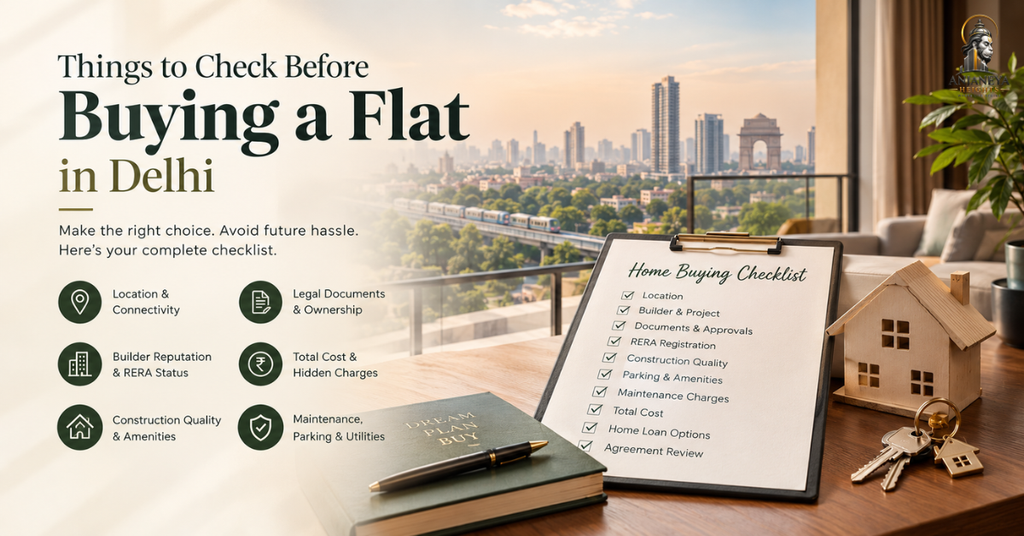
Final Checklist Before Buying a Flat in Delhi
Before making the final payment, make sure you have checked:
✓ Location and connectivity
✓ Builder reputation
✓ Ownership/title documents
✓ RERA status, where applicable
✓ Approved building plan
✓ Encumbrances and outstanding dues
✓ Occupancy/completion documents
✓ Carpet area
✓ Construction quality
✓ Parking
✓ Maintenance charges
✓ Total purchase cost
✓ Home-loan terms
✓ Sale agreement
Final Thoughts
Buying a flat in Delhi should be treated as a combination of a financial decision, legal transaction and lifestyle choice. A good property is not simply the one with the best-looking interiors or the lowest price. It should have a suitable location, clear documentation, appropriate approvals, reliable construction and costs that fit comfortably within your long-term budget.
Most importantly, do not rush because of a sales offer or limited-period discount. Verify the documents independently, compare multiple properties and take professional legal advice where necessary. A few hours of due diligence before purchasing can help you avoid years of unnecessary complications.
Property rules, charges and documentation requirements can vary depending on the property type and transaction. Verify the latest requirements with the relevant Delhi authorities and qualified professionals before completing a purchase.